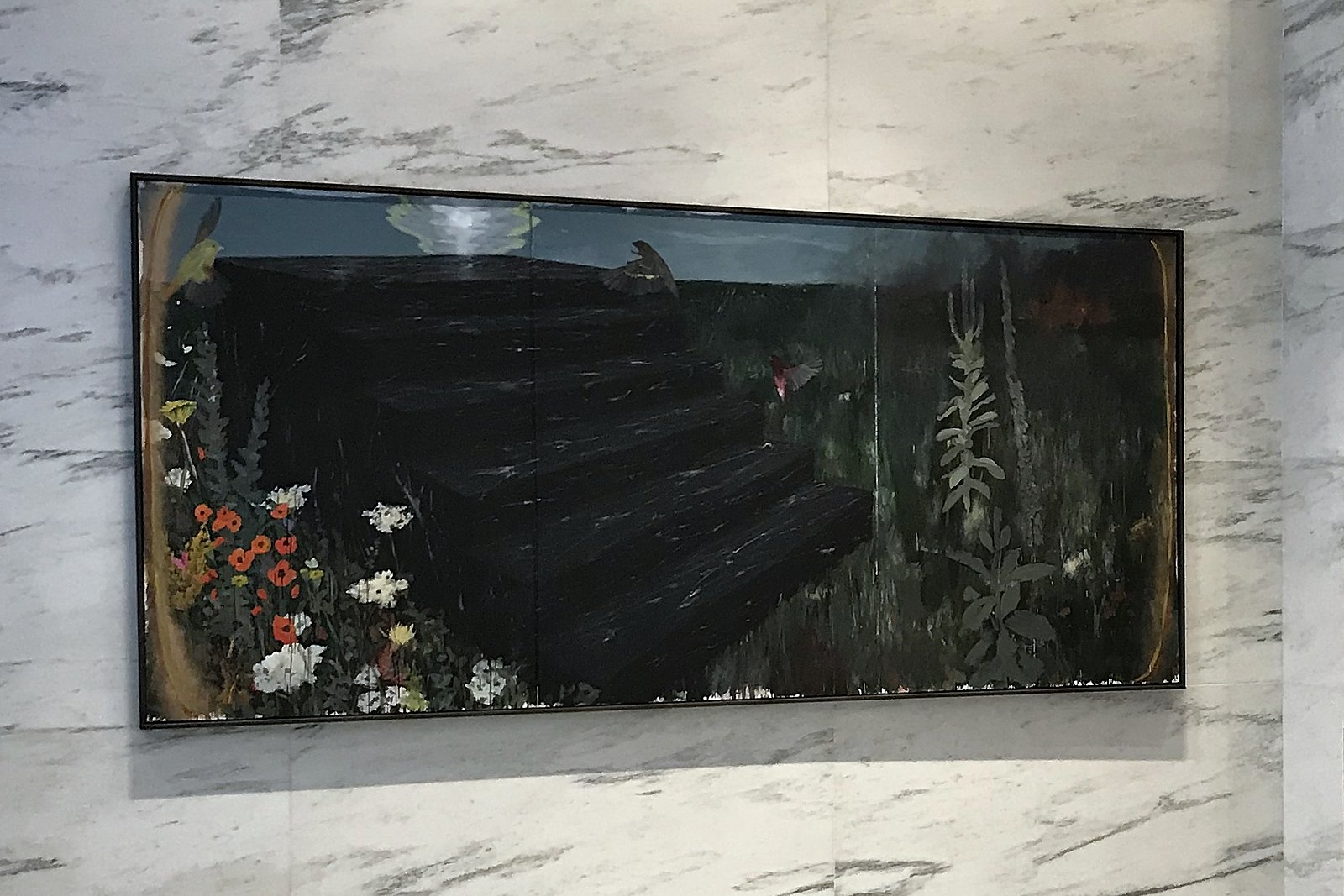
A homeowner chooses art for their own walls. A building chooses art for two hundred people who will walk past it twice a day for years.
That changes almost every decision about apartment building artwork, from what gets selected to how it goes on the wall.
Here is what a lobby, a corridor, and an amenity room each ask of the art, and what an occupied building asks of the installation.
Start with How Residents Actually See It
The art in the lobby is seen only a few seconds at a time. Residents are moving through quickly. They’re coming home with groceries, heading out with a stroller, stopping at the desk for a package. Almost nobody stops to study it.
But they see it every single day. A piece that delights in the first week can become wallpaper by the third month, or an irritation by the second year.
There is also a second audience. Guests, contractors, and prospective buyers or renters see the lobby once, and it tells them what kind of building this is.
So lobby art has two jobs. It has to land in a glance, and it has to hold up on the thousandth pass.
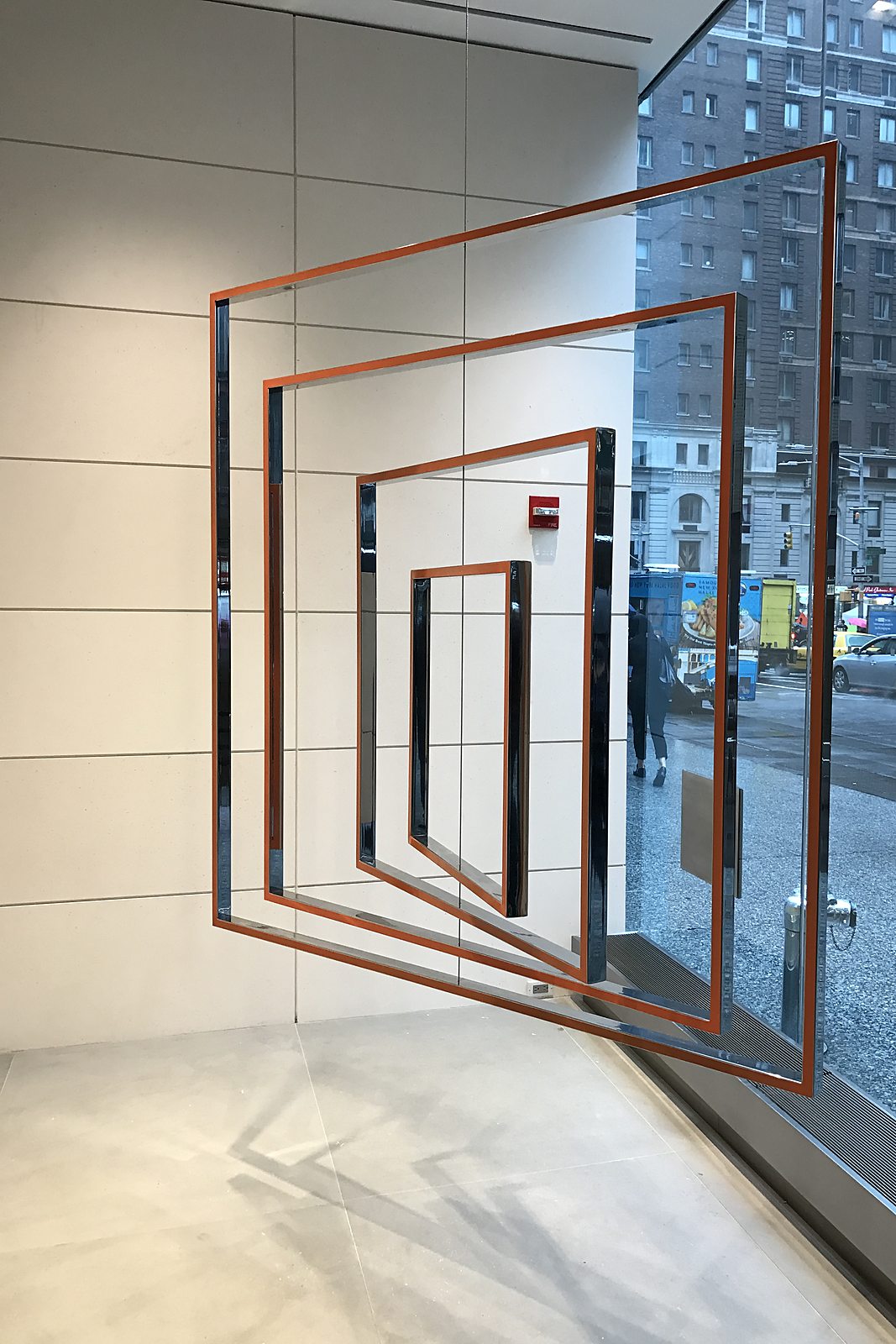
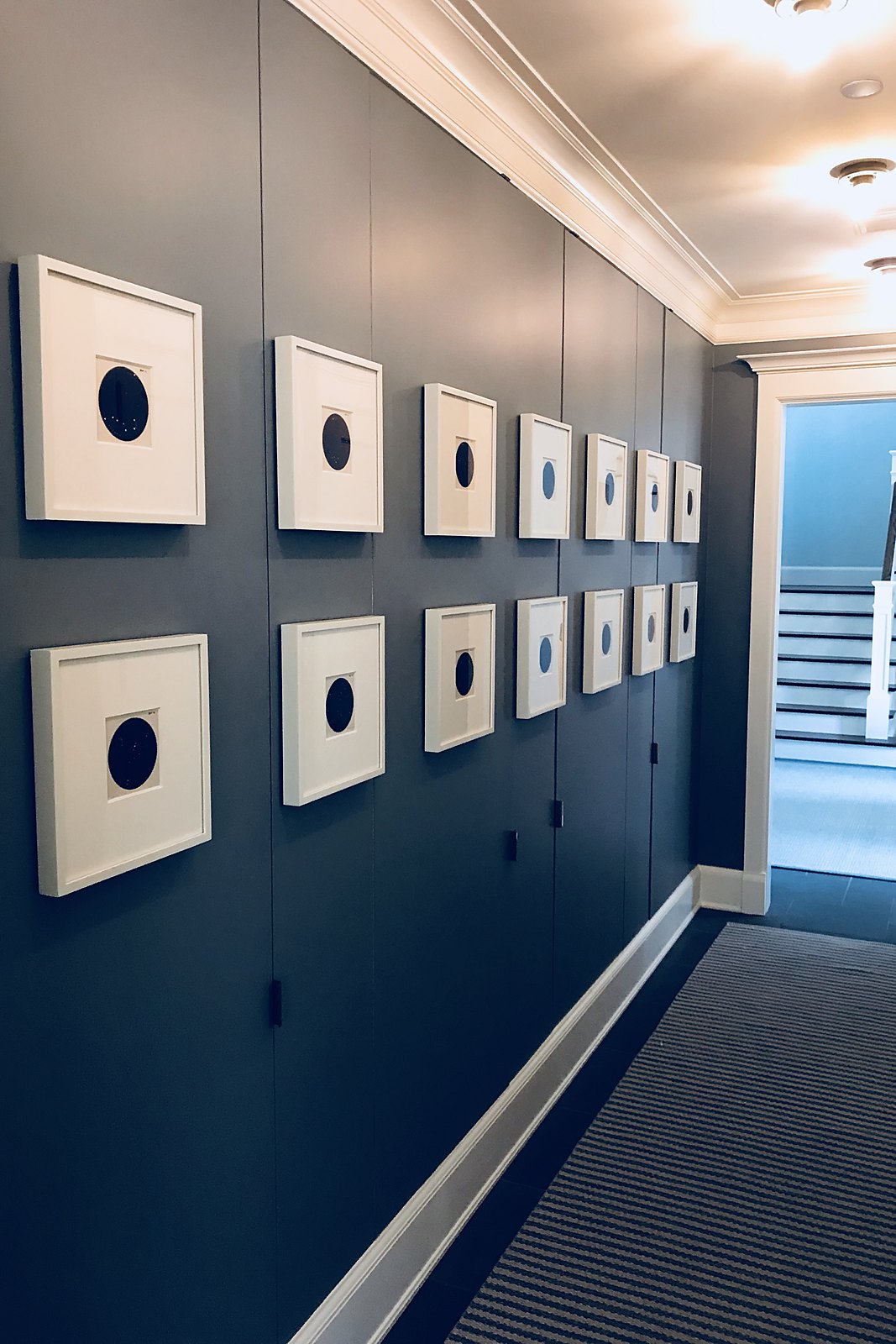
From the entrance to the corridor, each space asks something different of the art.
Each Common Space Asks Something Different of the Art
Most buildings treat their common areas as one project. They are really several, and the art in each one has a different job.
- The lobby sets the tone for the whole building. The work should be scaled to the room and read clearly from the entrance. Make a good first impression.
- Elevator landings and corridors help people know where they are. Consistency floor-to-floor makes the building feel considered and quietly helps with wayfinding. (We made the same case for repeating hospital floors in our piece on hospital artwork.)
- The mailroom and package room need durability above everything. These are the busiest, most bumped walls in the building. Sturdy framing, secure mounting, and nothing precious.
- Amenity spaces can carry more personality. In a lounge, library, screening room, or roof terrace, residents settle in and stay a while. These rooms are closer to a living room, so the work can be more personal and more ambitious.
- The fitness center has its own conditions. Humidity, vibration, and close contact all call for acrylic glazing over glass and mounting that won’t shift.
- A leasing or sales office works like a corporate reception. It is selling the building, so the art should support that first impression, much like the work we describe in our post on office art installation.
Selecting Art for a Building, Not a Person
Choosing art for a building is closer to curating than decorating, which is why many buildings bring in an art advisor or curator to lead it.
A good advisor does more than pick pieces. They can guide a board through approvals, set up a rotation so the lobby changes over time, and build programs that feature local artists, turning a common area into something closer to a small gallery that residents actually look forward to.
A few principles hold whether or not an advisor is involved.
- Select for broad resonance. Building art is usually approved by committee and lived with by everyone. Work that is calm, confident, and open to more than one reading tends to hold up. Anything that leans on a trend tends to date quickly.
- Match the value to the risk. Common areas see heavy traffic and little supervision. Why hide a masterpiece down a hallway, where it is both underappreciated and exposed? The most valuable work belongs where it can be protected and properly seen.
- Secure everything. Even modest pieces in a public space should be installed so they cannot simply be lifted off the wall.
- Think in series. Related works can move between floors and rooms without looking out of place, and adding to a series later is a much easier decision than matching a one-off.
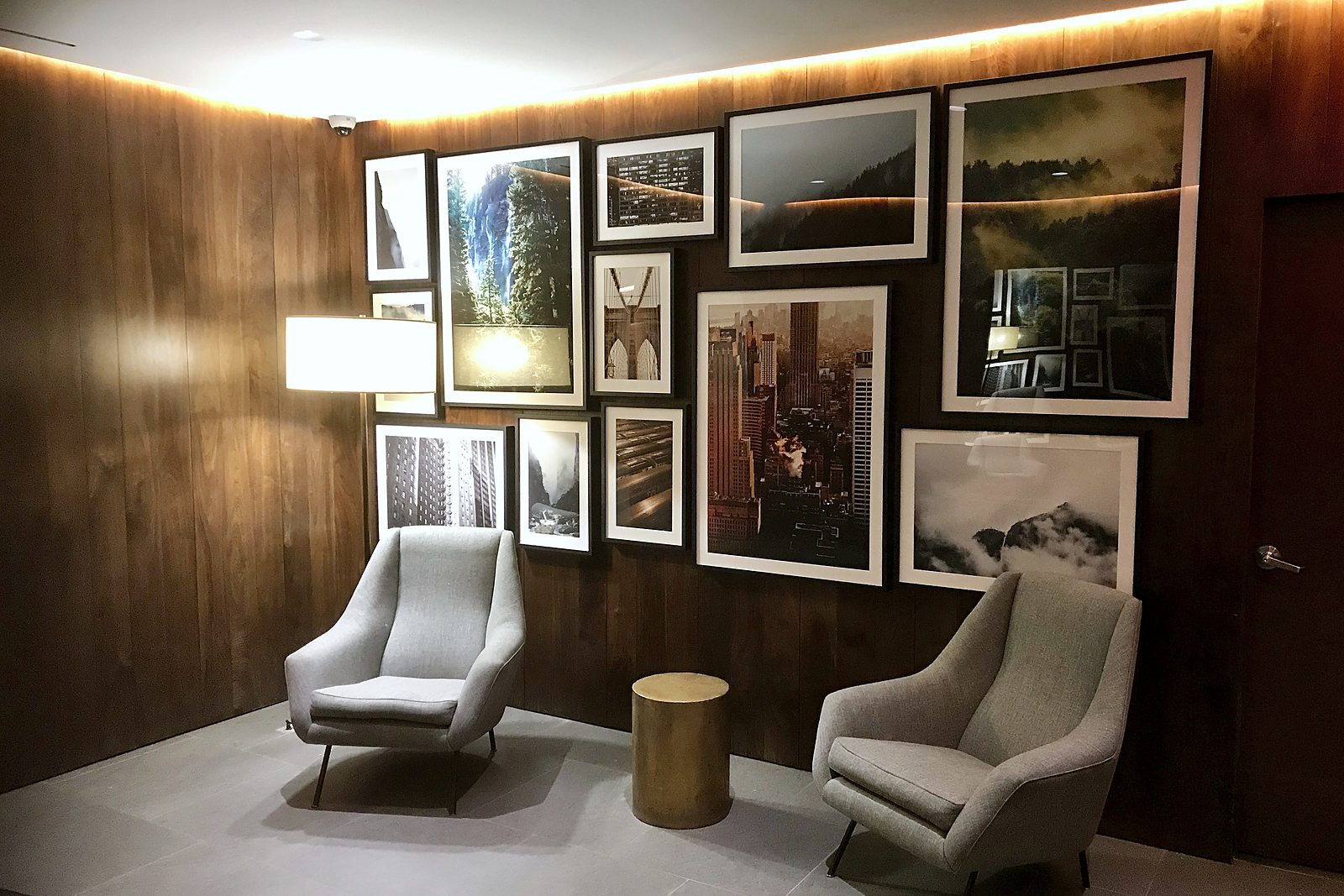
Amenity spaces are closer to a living room, so the art can carry more personality.
Ready to Install Your Building's Collection?
ILevel has installed artwork in New York residential buildings, lobbies, and amenity spaces since 1990.
Whether it is a single lobby wall or a series across every floor, we’re excited to work with you!
What an Occupied Building Requires of the Installation
Installing in an apartment building means working inside the place people live. The art may be the same as anywhere else, but the job is not.
- Schedule around residents. Elevator reservations, move-in and move-out days, freight access, and coordination with the front desk all shape when work can happen. A good installation is planned so most residents never notice it.
- Expect the paperwork. Most managed buildings ask for a certificate of insurance before anyone arrives, set approved work hours, and require protection for finished floors and walls. Sorting this out early keeps install day simple.
- Mount for an unattended space. Nobody is watching a lobby at 3 a.m. Security hardware that requires a tool to remove is standard practice for public areas.
- Plan for contact. Strollers, bikes, furniture deliveries, and cleaning carts all pass close to the walls. Corridor pieces should sit flat, and framing should be chosen to take a bump.
- Look closely at the lighting. This is the one most often missed. Lobbies are usually lit for mood, not for art. Downlights can throw bright scallops across the top of a frame, glazing can pick up glare from the entrance, and daylight through a glass front door slowly fades work over the years. As the Canadian Conservation Institute notes, light damage is cumulative and irreversible, so it is worth checking the light before the art goes up, not after.
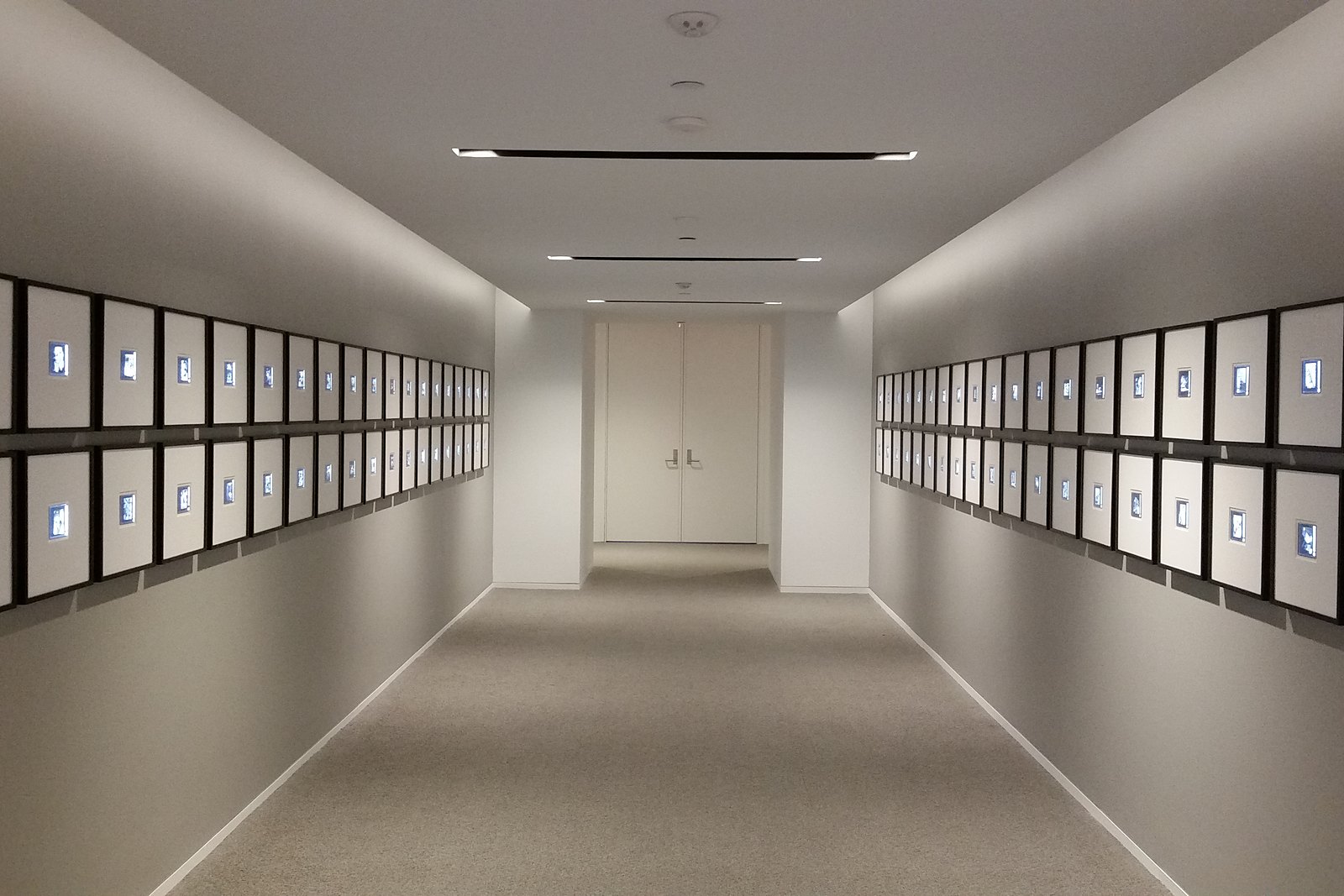
Lobbies are usually lit for mood, so the art often needs light of its own.
Keeping the Collection Fresh
Common area art is often installed once and then forgotten. Ten years later, nobody remembers who chose it, and nobody sees it anymore.
A rotation fixes that. Changing the lobby seasonally, or every year or two, gives residents a reason to look again and signals that the building is cared for. It is also where an art advisor and a local artist program really pay off.
If you are an art advisor, or working with one, use the same installers and de-installers every time. A consistent team already knows the walls, the hardware, where the anchors are, the condition of each piece, and the building staff. Every rotation after the first is faster, cleaner, and easier on both the art and the residents.
ILevel offers seasonal art rotation for buildings and collections that change over time.
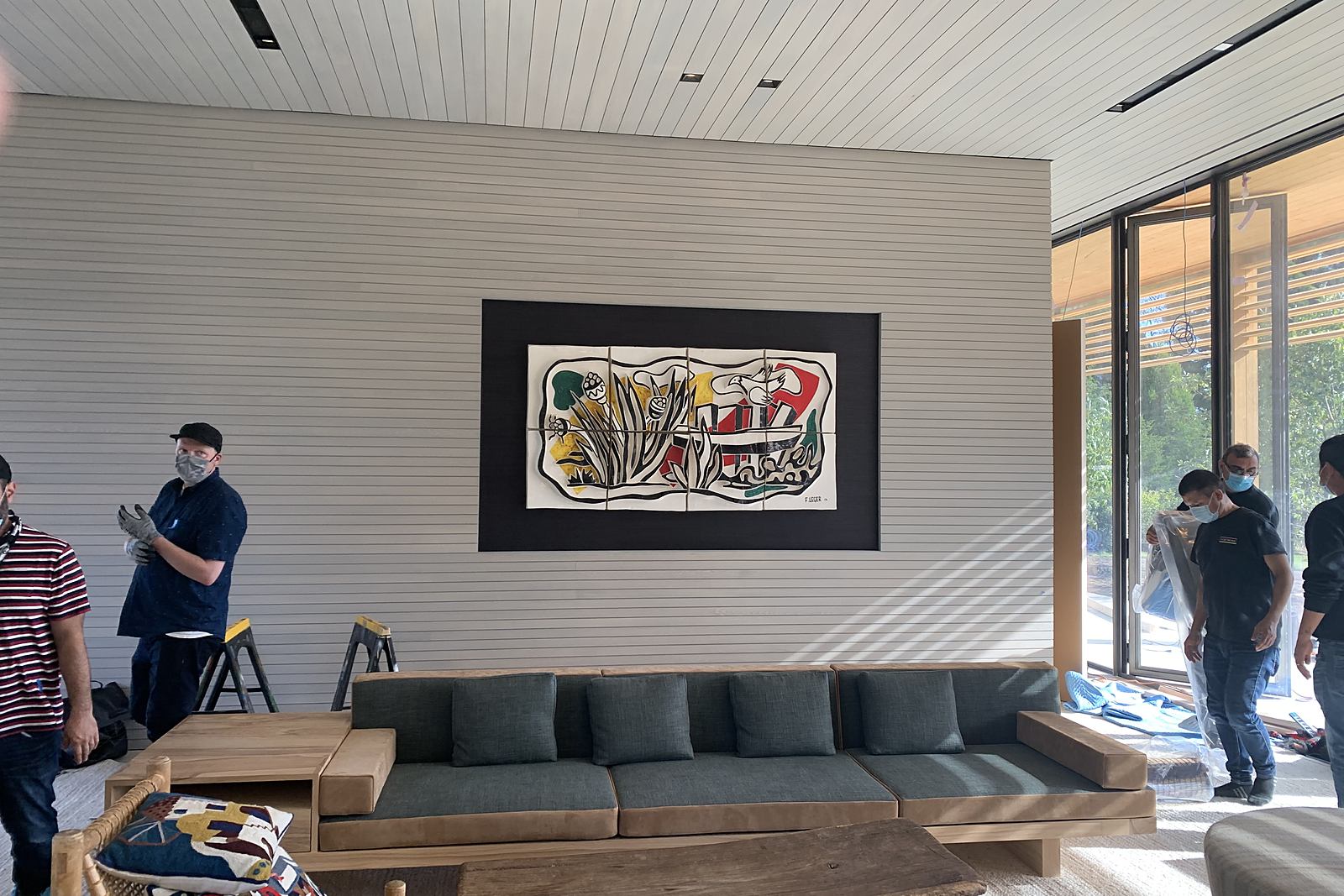
A consistent installation team knows the walls, the hardware, and the building.
Talk to Us!
ILevel has installed artwork in New York residential buildings since 1990, working alongside boards, building managers, management companies, and art advisors.
The best time to bring in an installer is before the art is bought. We can tell you what a wall will hold, how the light will treat a piece, and what the building will require, before any of it becomes a problem.
If you are planning art for a lobby or common areas, or rotating a collection you already have, request an estimate and we will take a look.
Reach Out to Schedule Your Project
Contact us today for a project estimate or to schedule a site visit. We’re here to answer any questions.
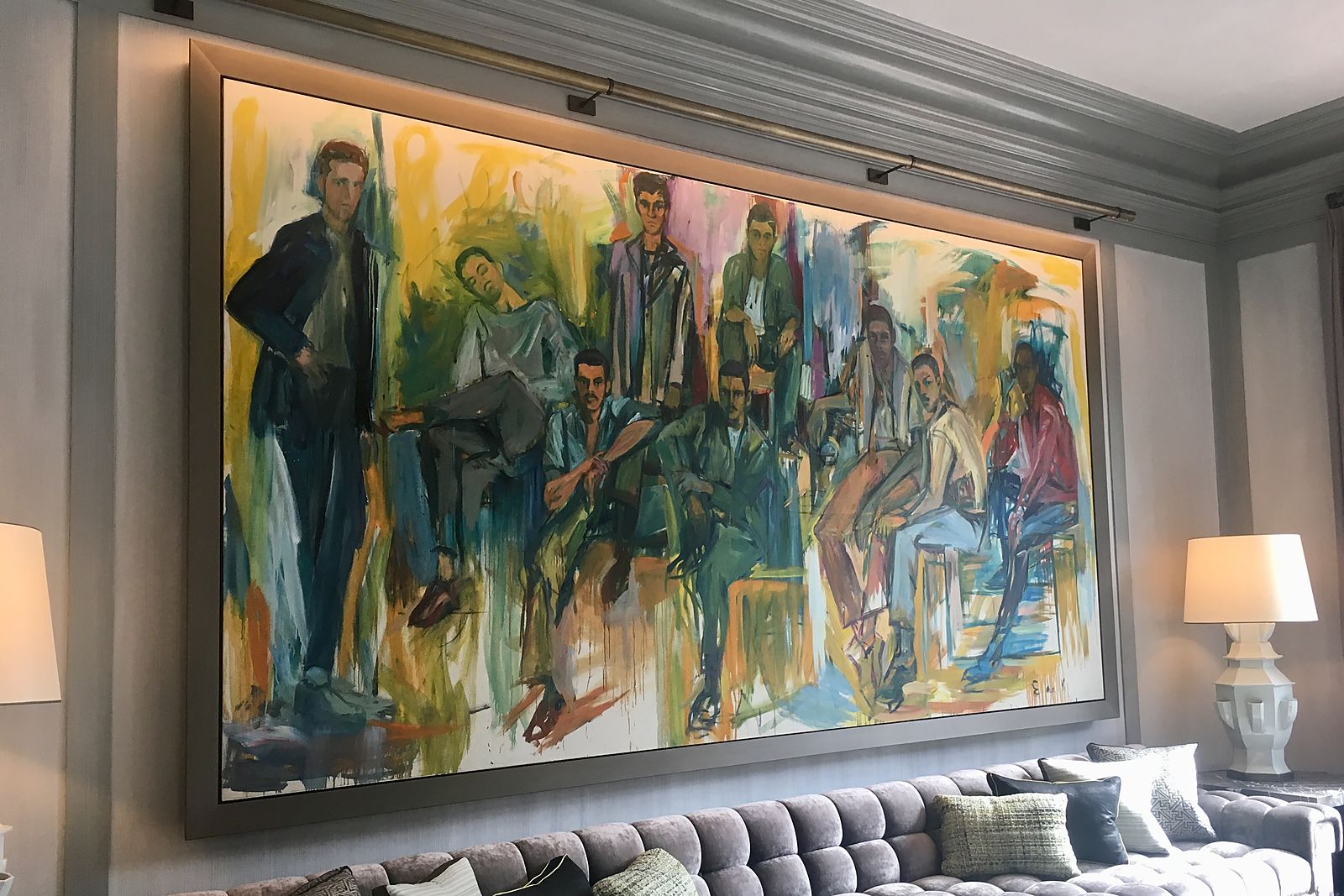
A finished lounge installation, planned around the room and the people who use it.
Frequently Asked Questions
How should artwork be selected and installed in apartment lobbies?
Select for two audiences at once: residents who pass the work every day for years, and visitors who see it once and judge the building by it. That usually means calm, confident work that reads in a glance but holds up to repeat viewing, scaled to the room and to the view from the entrance. Many buildings bring in an art advisor or curator to guide the selection and the board approval. For the installation itself, use security hardware that requires a tool to remove, check how the existing lighting falls on the wall, and schedule the work around residents, with a certificate of insurance and floor protection arranged in advance.
How do you install artwork in apartment common areas?
Treat each space as its own brief. Corridors and elevator landings benefit from a consistent series that sits flat to the wall and stays clear of traffic. Mailrooms and package rooms need durable framing and secure mounting, since they take the most contact. Amenity spaces like lounges and libraries can hold more personal work, and fitness centers call for acrylic glazing over glass. Across all of them, mount for an unattended space, work within the building’s approved hours and elevator reservations, and protect finished floors and walls. A professional installer will also check wall construction, since many buildings mix plaster, drywall, and masonry from floor to floor.
What height should artwork be installed in an apartment lobby?
The usual convention centers a work around 57 to 60 inches from the floor, which suits a standing viewer and works for most lobby walls. Lobbies often call for adjustments, though. A large piece seen from across the room or from the front door may need to sit higher so it reads above people and furniture. Work above a console, bench, or seating area should relate to that furniture, usually with a few inches of space between the two. In a lounge where people sit, a lower centerline is often more comfortable. The reliable method is to stand, and sit, where residents actually will, and set the height from there.
Who approves artwork for an apartment or condo building?
It depends on how the building is run. In a co-op or condo, the board usually has the final say, sometimes working through a design or art committee. The managing agent often coordinates the process and sets the practical rules: insurance requirements, work hours, and elevator access. In a rental building, the owner or management company typically decides. An art advisor or interior designer may lead the selection and present it for approval. It helps to know who signs off before anything is purchased, since building art often passes through more than one set of hands, and bringing an installer in early can answer practical questions before the approval meeting.